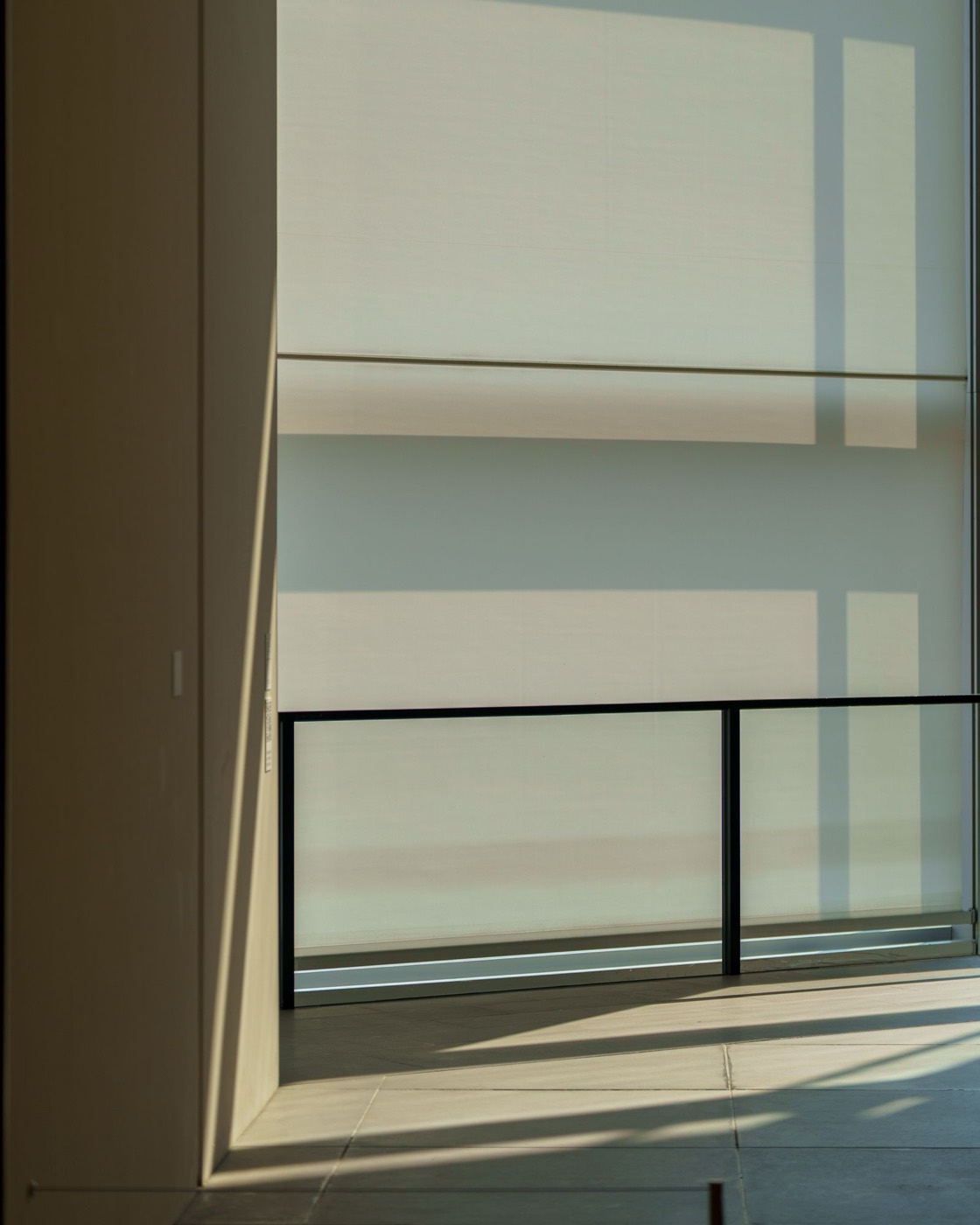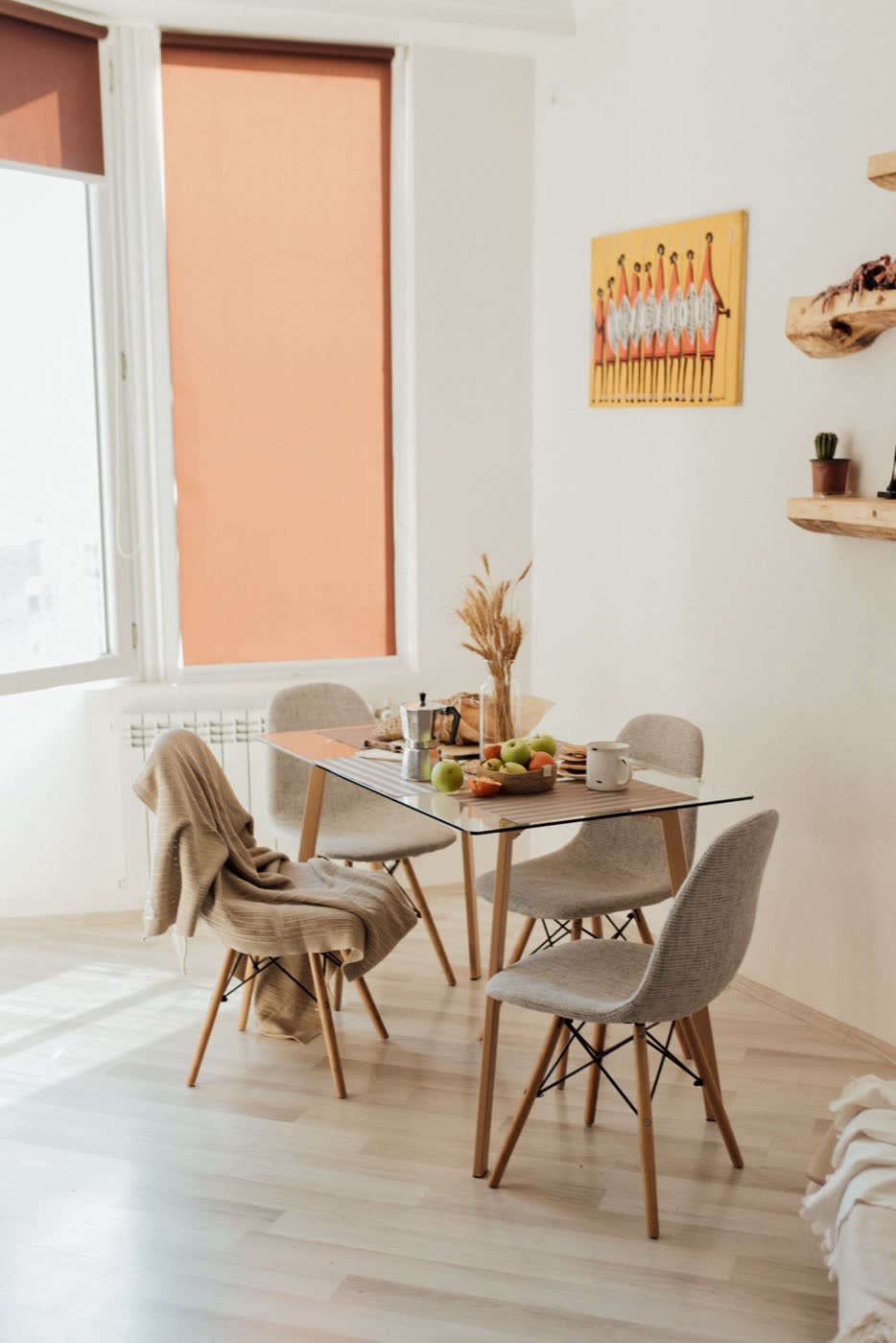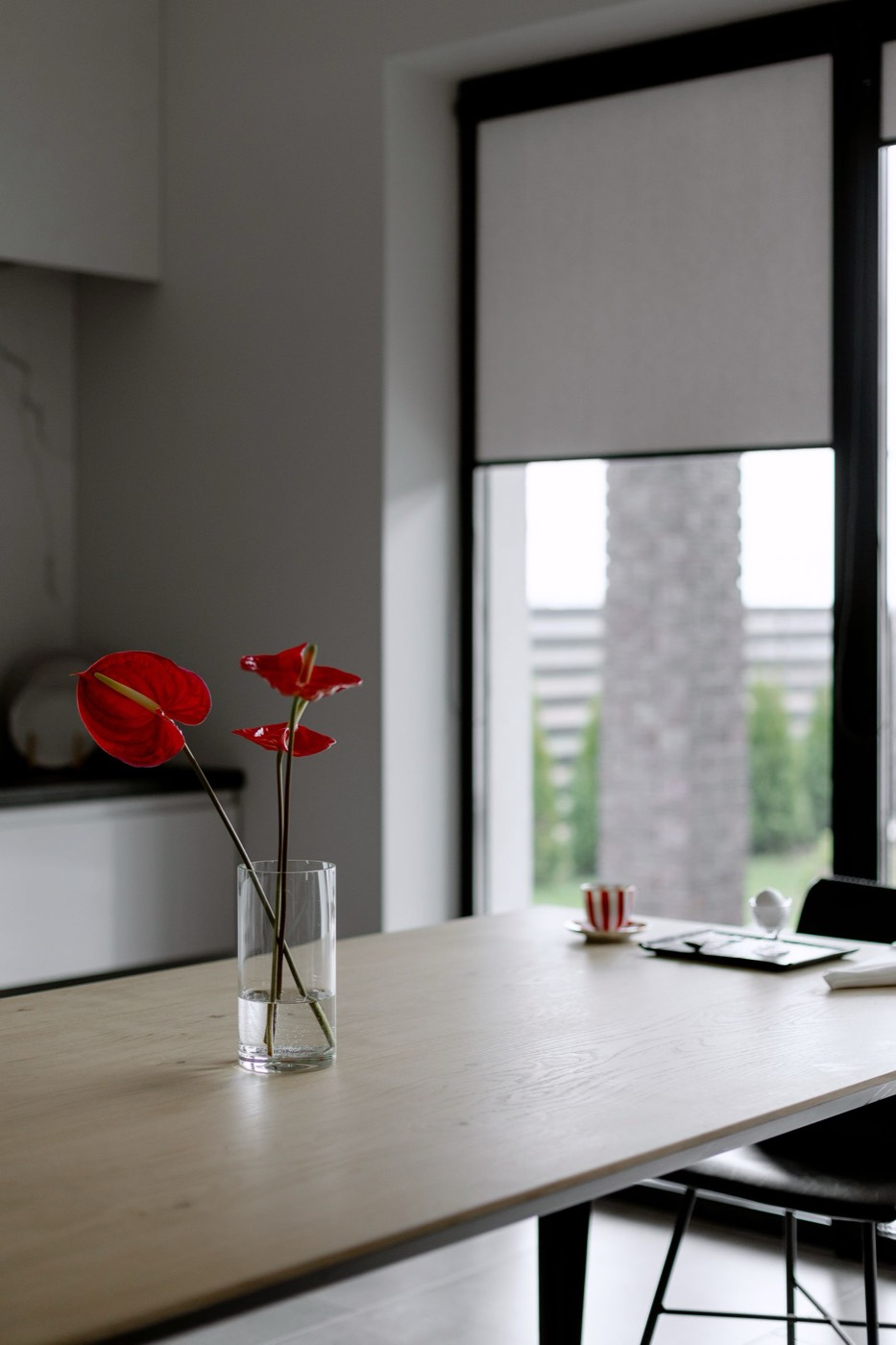
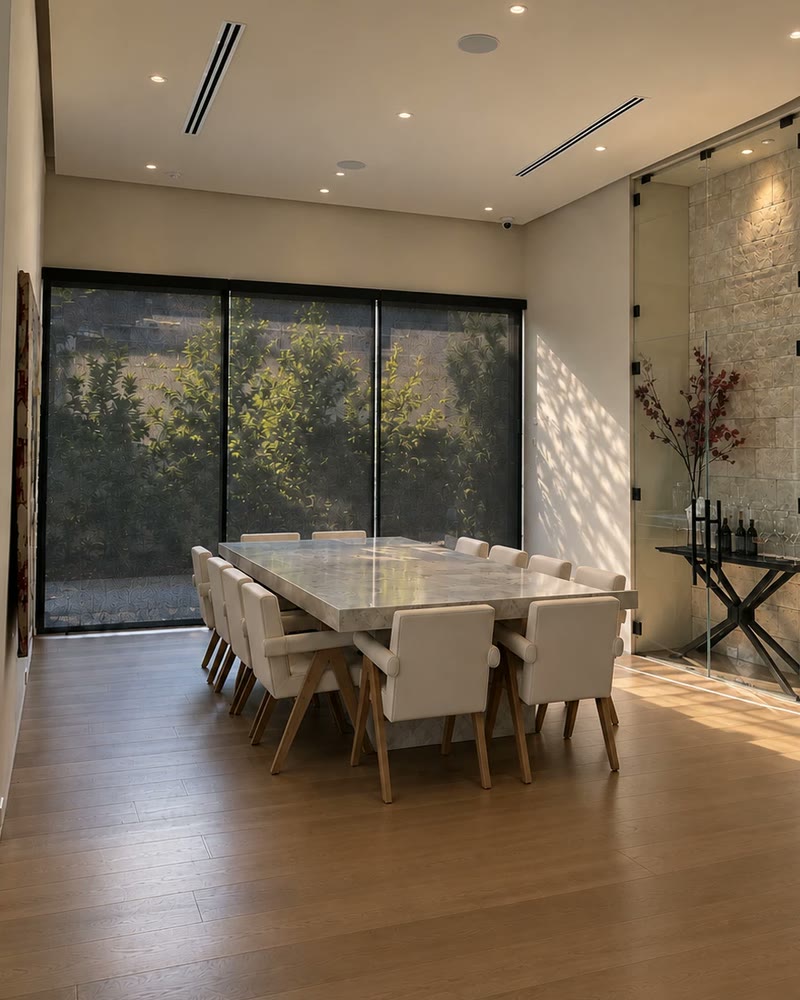
For most west-facing rooms in Los Angeles, the best shade is a light-filtering roller shade on a motor with a schedule, so it closes before the afternoon sun arrives instead of after the room is already hot. Use a zebra shade where you want to adjust the light during the day, and a blackout shade in west-facing bedrooms. If the glass opens onto a patio, an exterior shade stops the sun before it ever reaches the glass, which no indoor shade can do.
Why are west-facing windows the hard ones?
Because the sun hits them in the afternoon, when the house is already warm and people are home. In the Valley the afternoon sun is punishing. A west window turns a living room into a place you avoid from late afternoon on and puts glare across every screen.
The shade has two jobs on that window: cut the glare so the room is usable, and cut the heat so it stays comfortable.
Which shade types work on west-facing glass?
| Shade | What it does on a west window | Best for |
|---|---|---|
| Light-filtering roller | Softens the glare and keeps the room bright. No view through it | Living rooms, kitchens, most rooms |
| Zebra shade | Open the sheer bands in the morning, close them when the sun arrives | Living rooms and offices where the light changes through the day |
| Blackout roller | Stops light completely and cuts a large part of the afternoon heat load | Bedrooms, media rooms |
| Exterior patio shade | Stops the sun before it reaches the glass or the paving | Patios, pergolas, glass walls facing a yard |
Is a light-filtering roller shade enough?
For most rooms, yes. A light-filtering fabric keeps the room soft and bright but takes the edge off the glare. You don’t see out through it, so it also gives you daytime privacy from a neighbor.
The catch is timing. A shade that goes down after the room has heated up is late. That is where a motor helps.
Why motorize shades on a west window?
A scheduled shade closes before the room heats instead of after. The households that get the most out of motorized shades use scenes: everything in the living room down at 4pm when the west sun arrives, everything up again in the morning. We set those schedules up during the install.
It also means the shades get used. Once a room has more than four or five windows, adjusting them by hand every afternoon stops being realistic. See motorized shades.
What about a zebra shade?
A zebra shade suits a west-facing living room or home office where you want the morning light and not the afternoon glare. Open the bands in the morning, close them in the afternoon, and you never have to raise the whole shade.
It is not a blackout shade. Even closed, some light passes. See zebra shades.
What should go in a west-facing bedroom?
Blackout. An opaque shade on west-facing glass cuts a large part of the afternoon heat load. It is not a substitute for good glass, but the room is noticeably cooler, and it will be dark if anyone sleeps during the day.
Make sure the edges are handled. An inside-mounted shade leaves a gap down each side, and on a west window in the afternoon that gap is a bright line. An outside mount or side channels fix it. See blackout shades.
Do outdoor shades work better than indoor ones?
For heat, yes. An indoor shade deals with the sun after it has come through the glass. An exterior shade stops it before it reaches the glass or the paving, which is the most effective thing you can do for a west-facing patio and the rooms behind it. It also protects the patio furniture.
Outdoor shades have to be built for wind: side guides or cables, a heavier hem bar, mounting into real structure, and a wind sensor where the exposure calls for it. The usual outdoor fabric is an open-weave mesh that keeps the yard visible while cutting glare and heat. With a motor and a sun sensor, the shade comes down by itself when the sun swings west. See outdoor and patio shades.
How do I pick the fabric color?
In your own light. A fabric looks different on a west wall at four in the afternoon than it does under showroom lights, so we bring samples to the house and hold them on the actual window at the time of day that matters. You can browse the full range beforehand on our fabrics page.
What we’d put in your room
- West-facing living room: light-filtering roller shades, motorized, on a schedule that lowers them before the sun arrives. Zebra if you want to adjust the light and keep some view.
- West-facing bedroom: blackout roller, outside mount or side channels, motorized if the windows are hard to reach.
- Home office facing west: zebra, to control screen glare through the afternoon.
- Glass wall opening onto a west-facing patio: exterior shades on a motor with a sun sensor, with light-filtering rollers on the glass inside.
If your west glass is a wall of sliding doors, see the Woodland Hills sliding door job; for a kitchen, see our Beverly Hills kitchen.
Book a free consultation and we’ll hold samples on your west windows: request a quote or call (702) 927-2537.