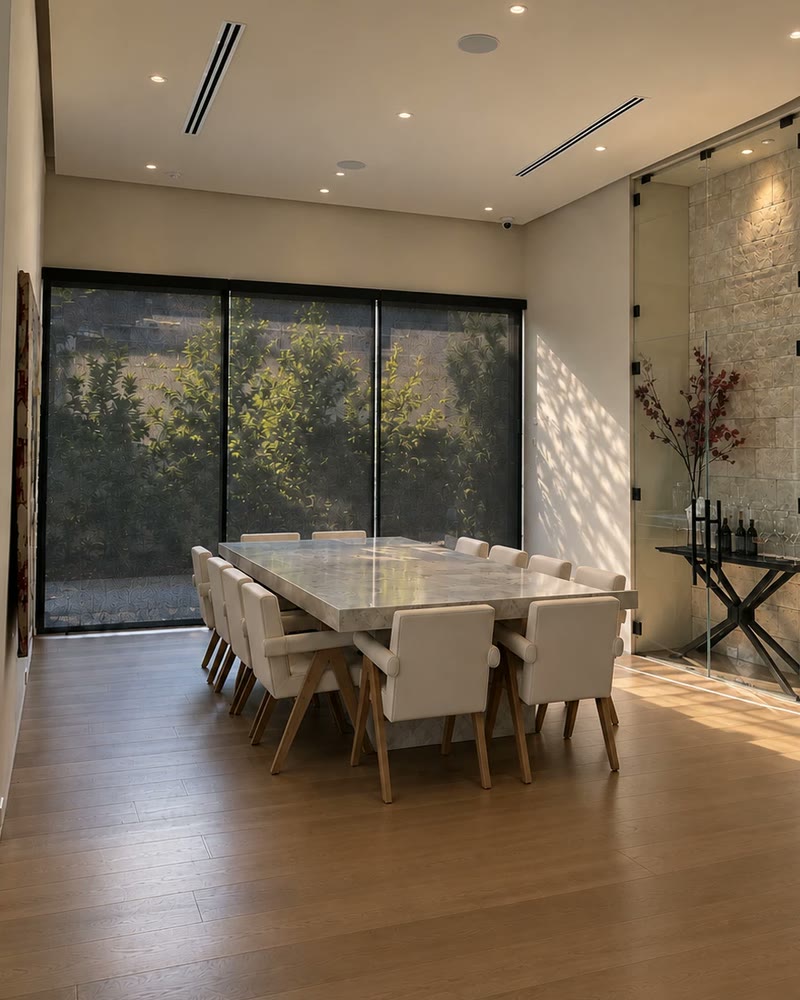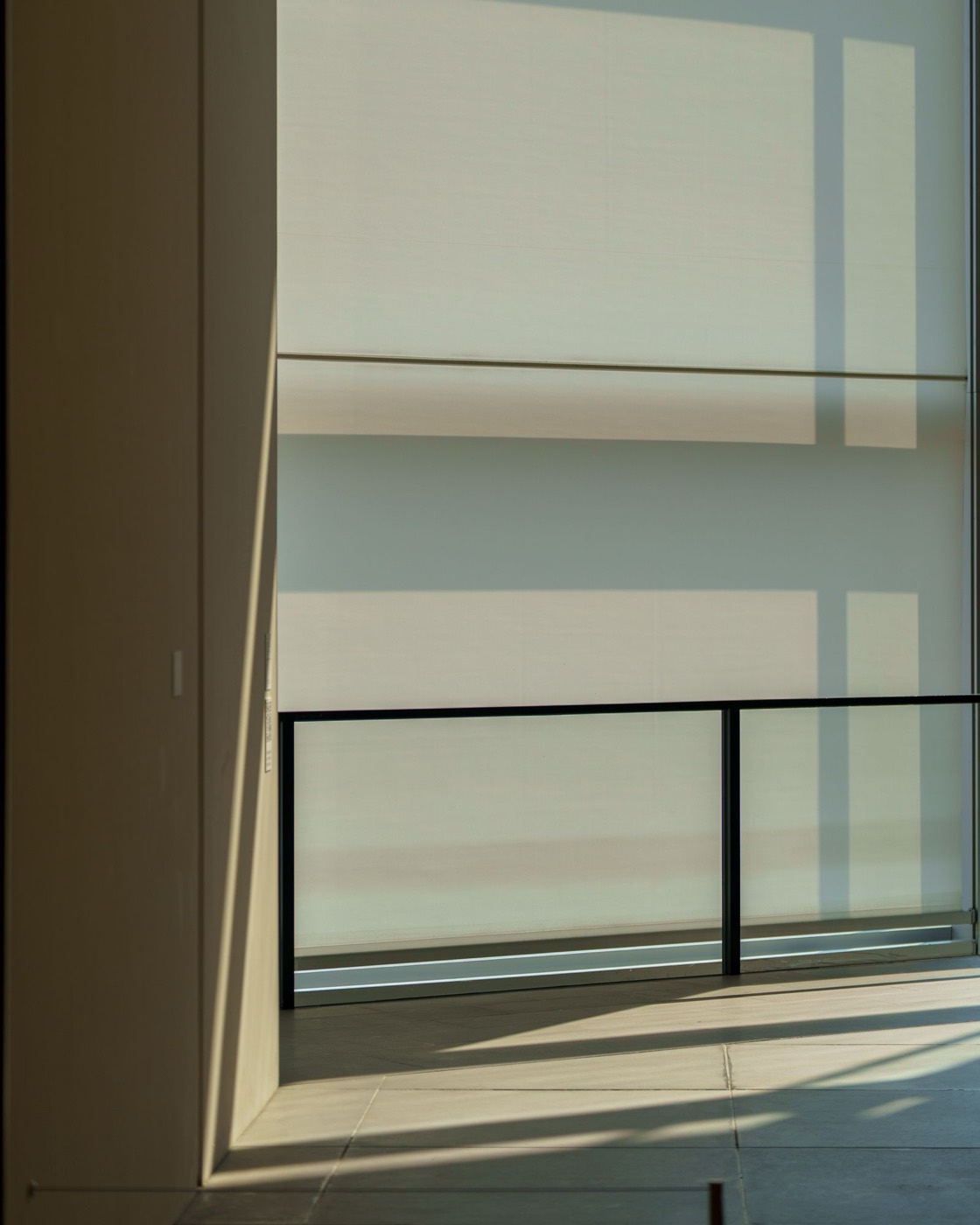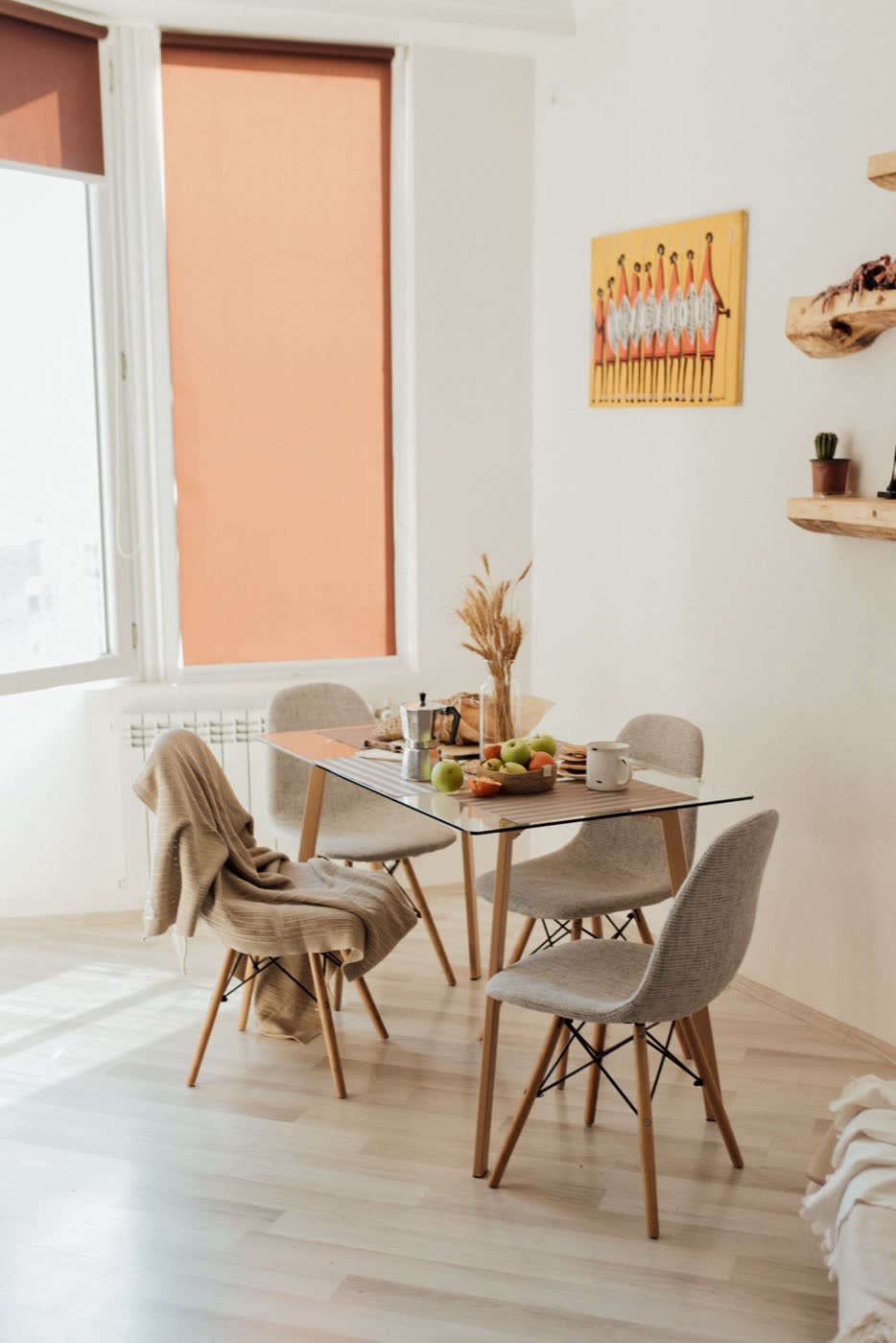
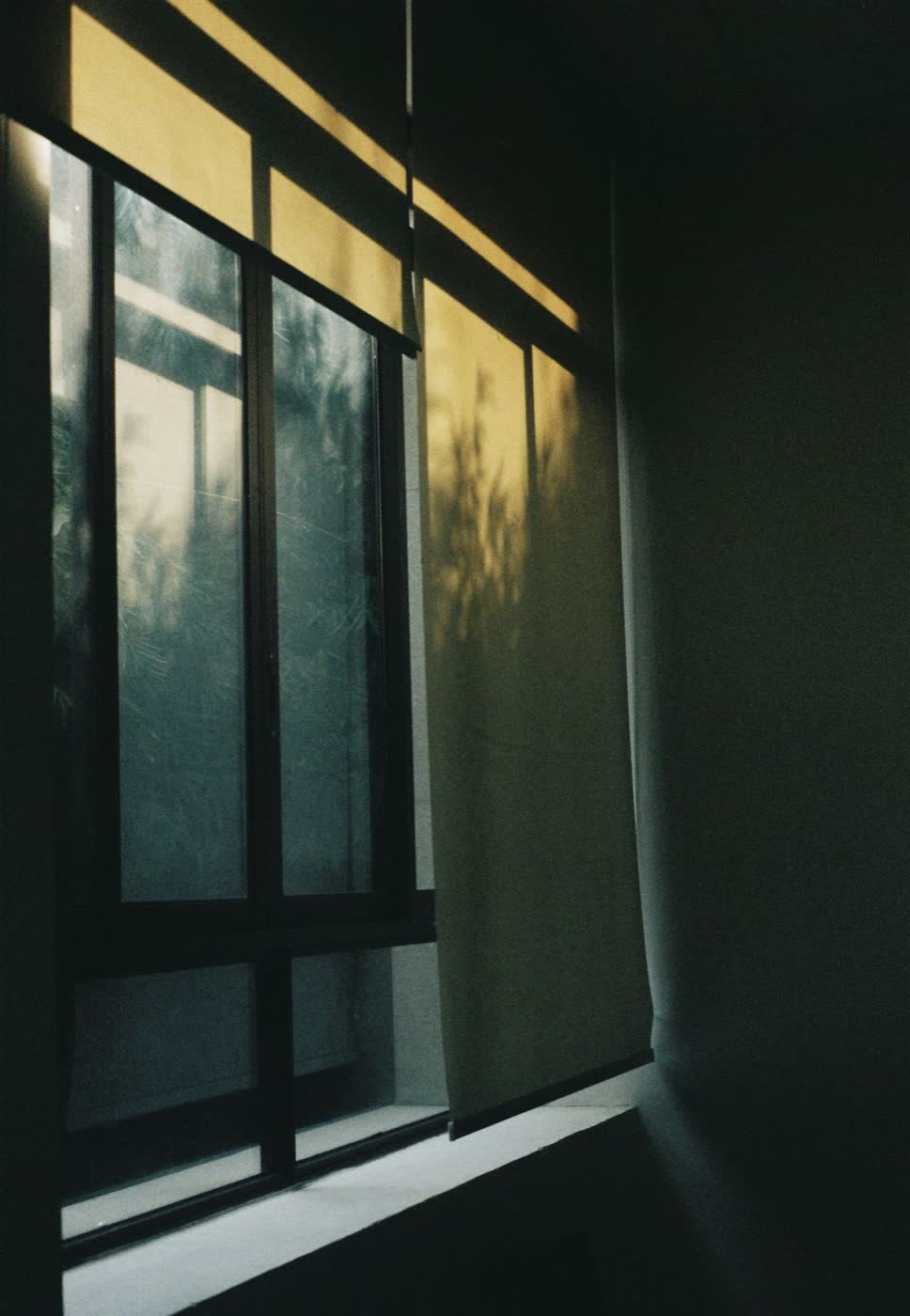
Yes, often you can. A light filtering shade gives good privacy during the day, but at night, with the lights on inside, people outside can usually see shapes, shadows and movement through it. They will not see details, but they will see that someone is there.
Why are light filtering shades private by day but not at night?
Privacy through any fabric depends on which side of the window is brighter. During the day the outside is brighter, so someone looking in sees the bright fabric, not the room. At night it flips: your lamps make the inside brighter, and the fabric starts to glow with your room behind it.
The more open the weave and the lighter the color, the more shows through.
How do you get privacy at night?
- Pick a denser light filtering fabric. It still lets daylight in, but shows far less after dark. We bring samples to your window at the free measure so you can see the difference in your own light.
- Go with a dual shade. A dual roller puts a light filtering shade in front and a blackout shade behind. Use one by day and the other at night.
- Use blackout where privacy matters most. Bedrooms and bathrooms facing the street usually get blackout shades.
- Consider zebra shades. A zebra shade can close its solid bands at night. See are zebra shades room darkening for how dark they get.
Is this the same for solar and screen shades?
Yes, and even more so. Screen fabrics are made to keep a view out, which also means a view in once it gets dark inside.
Which rooms need night privacy most?
Street-facing bedrooms, bathrooms and ground-floor living rooms. Back rooms facing a private yard can usually stay light filtering.
Compare fabrics on our fabrics page, or see custom roller shades in Los Angeles. Book a free consultation and we will hold the fabrics up on your window: request a quote or call (702) 927-2537.