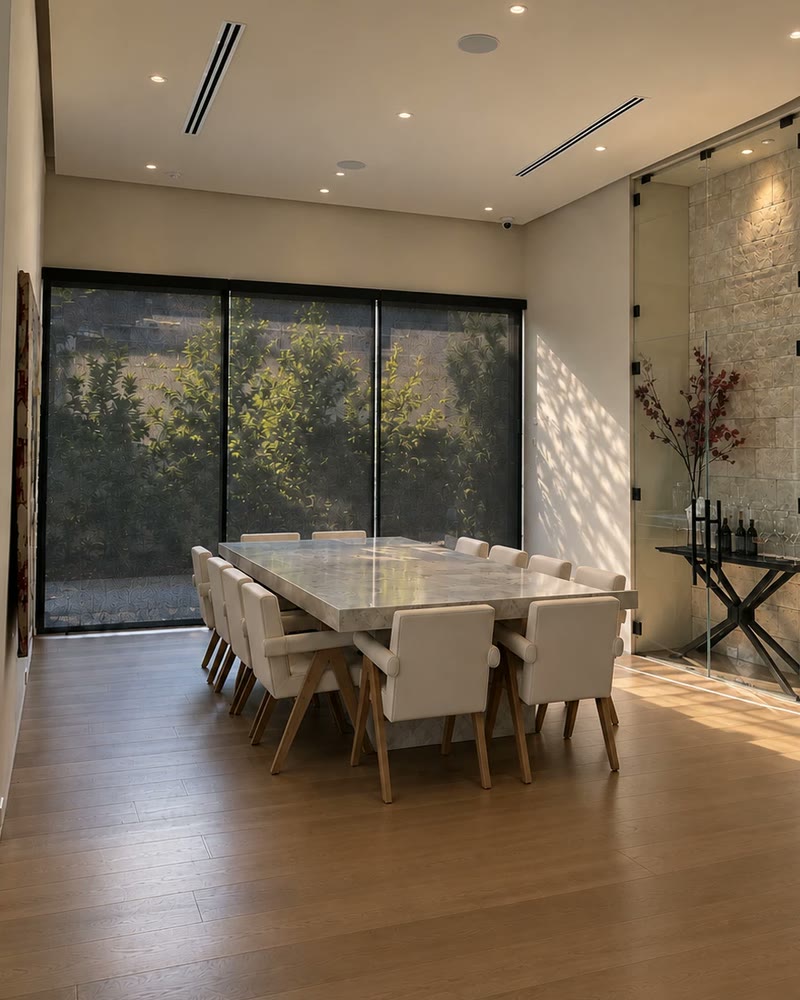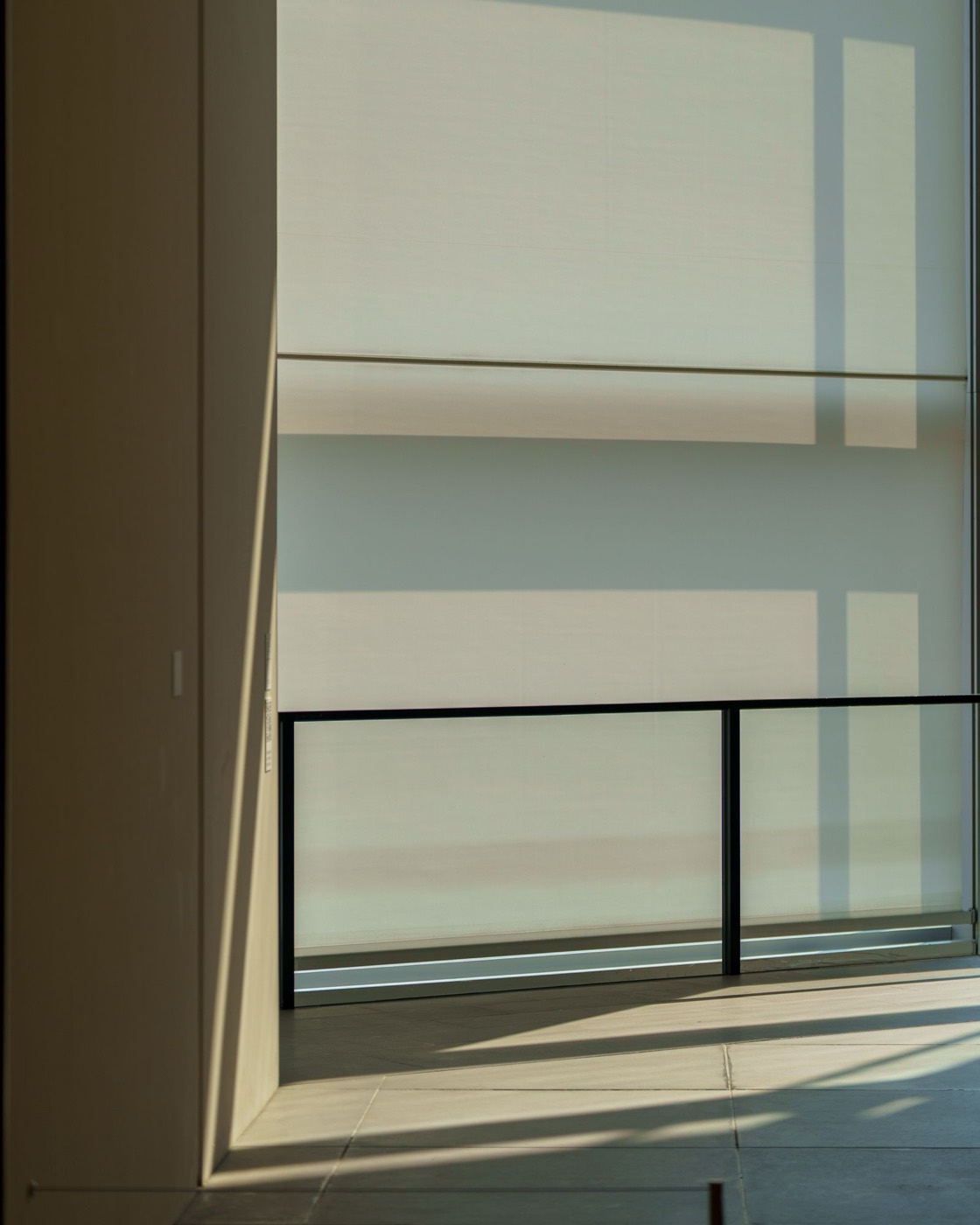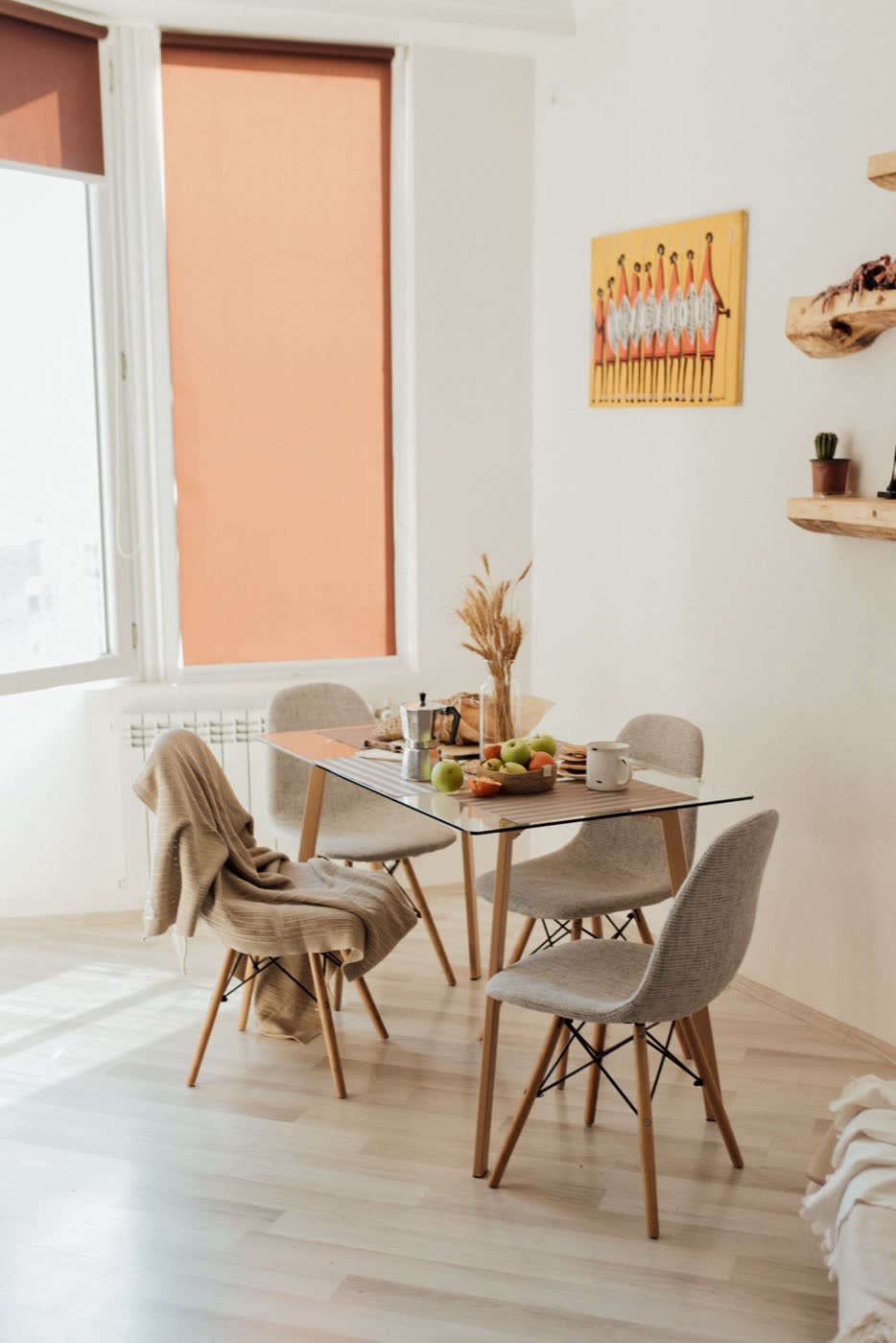
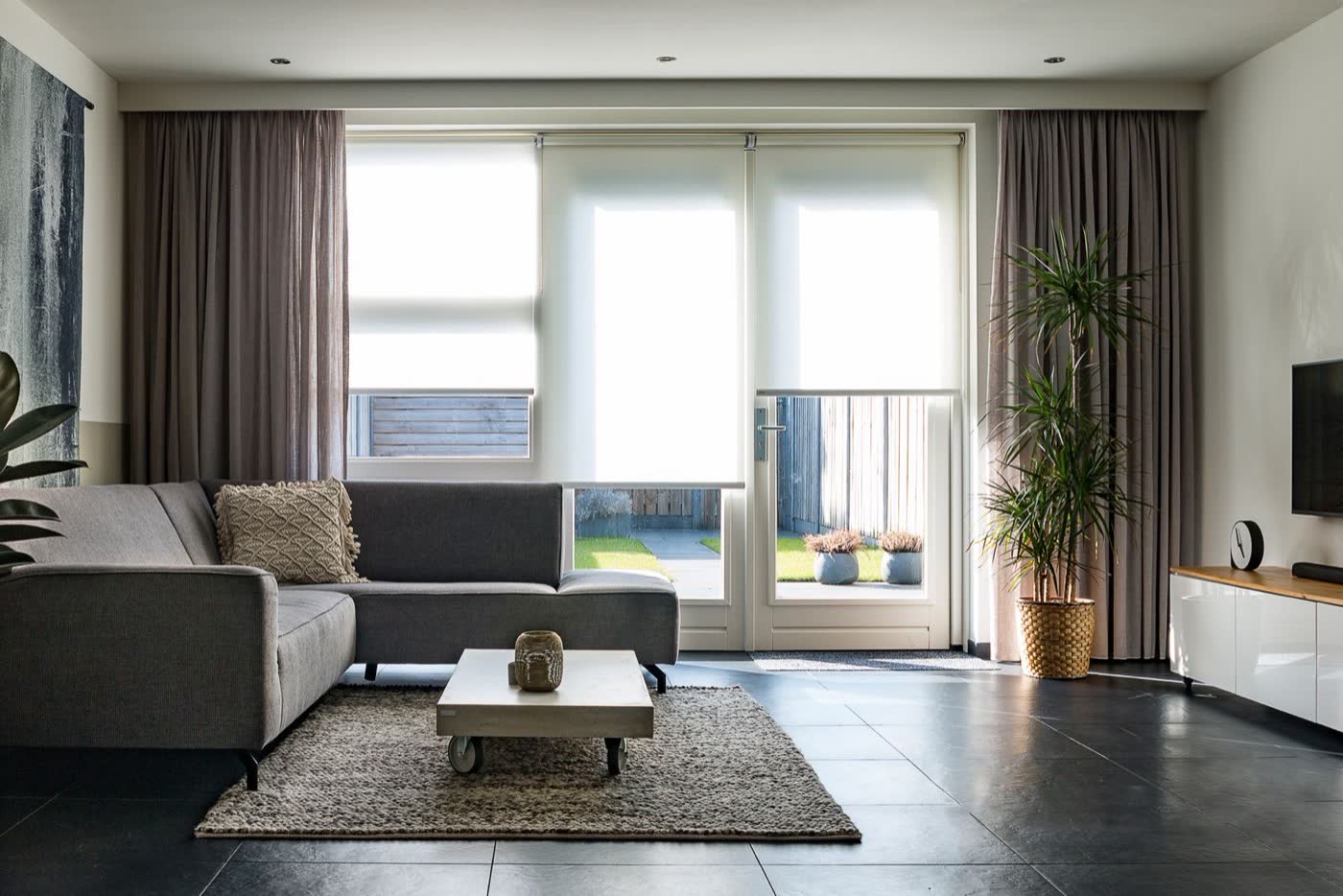
No, all window treatments in a house don’t need to match. What matters is that windows you see together look like they belong together. Past that, pick the fabric each room actually needs: light filtering where you want daylight, blackout where you sleep.
Which windows should match?
- Windows in the same room. Same style, same color, same height when lowered.
- Rooms that open into each other. In an open kitchen, dining and living space, it all reads as one room.
- Windows facing the street. From outside, a row of matching shades looks neat. Mixed colors look patchy.
Where can you mix?
- Bedrooms. Go blackout for sleep, even if the living room is light filtering. See light filtering vs blackout shades.
- Bathrooms. Privacy fabric first. See the best shades for bathroom windows.
- Kitchens. A light filtering roller that wipes clean. See the best shades for kitchen windows.
- Kids’ rooms and offices. A different color can be fun behind a closed door.
How do you keep a mixed house looking consistent?
- Same style. Roller shades throughout, or zebra in some rooms and roller in others, but keep the same style within a space.
- Similar color from outside. Keep street-facing windows in one color, even if rooms differ inside.
- Same hardware. Matching rollers and bottom bars tie it together.
- Same height. Line up the tops of the shades across a wall of windows, even if the windows are different sizes. It looks planned.
Can you mix shades and curtains?
Yes. A shade for light and privacy, with curtains on the sides for softness, is a common look. We build the shades; the curtains are up to you.
What about motorized shades?
If some rooms are motorized and others aren’t, they can still match: same fabric, same roller. Motorized shades in a room move together at the push of a button, so they always line up. Read are motorized shades worth it.
Lay out a plan room by room on our fabrics page. Book a free consultation and we will help you choose: request a quote or call (702) 927-2537.